
Online Therapy for Anxiety in India: How It Works and What It Costs
iBeing Editorial · 28 September 2026 ·
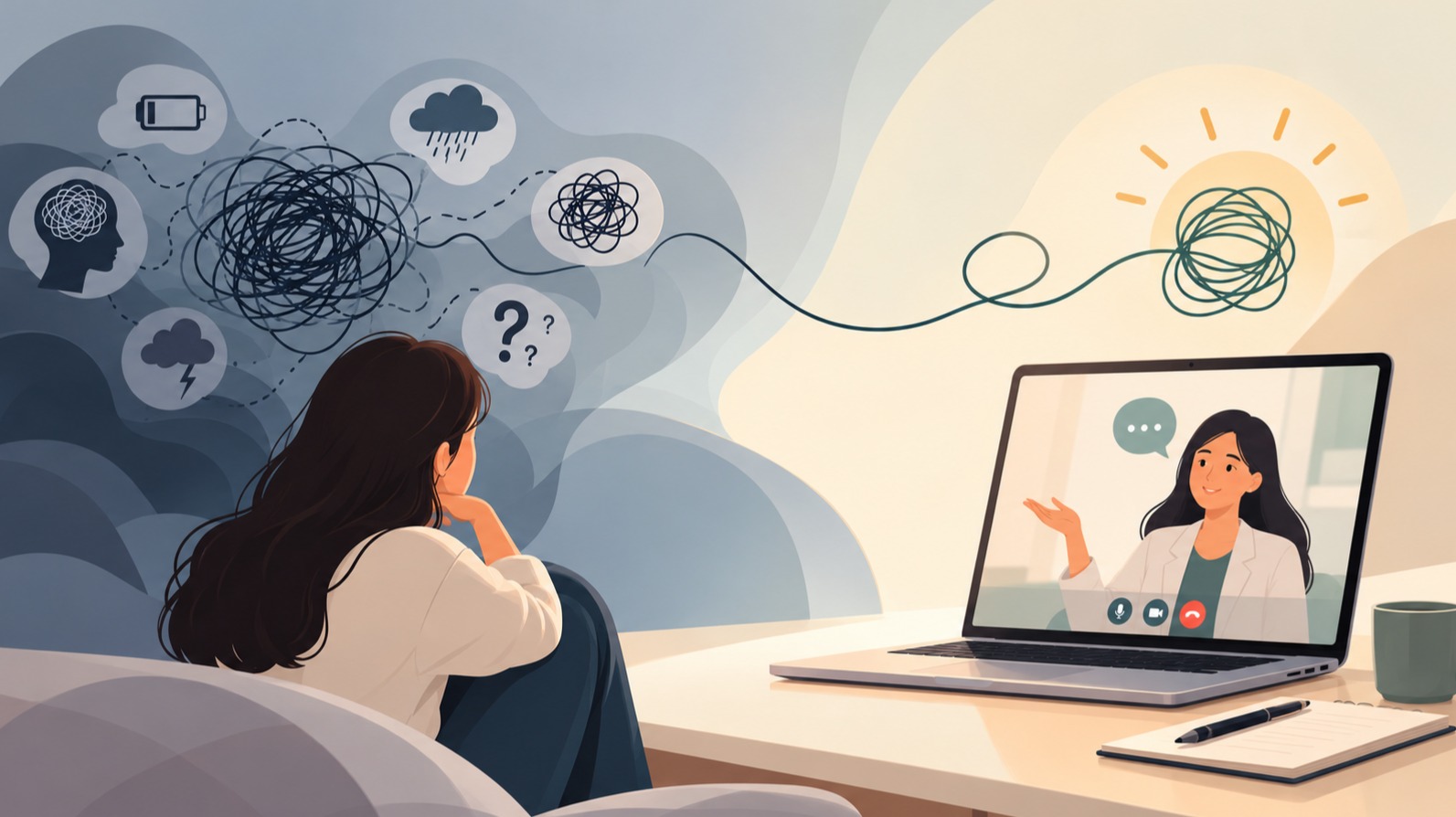
If you've typed "online therapy for anxiety near me" into Google at 1 a.m., you're not alone. Anxiety has quietly become one of the most searched mental health concerns in India — and one of the least talked about at the dinner table. The good news is that getting help no longer means taking a day off work to sit in a waiting room. It means opening your laptop.
Here's a clear, no-jargon look at how online anxiety therapy actually works in India, what it costs, and how to figure out if it's the right fit for you.
What Counts as "Anxiety" Anyway?
Anxiety isn't one thing — it shows up differently for different people. Some common patterns:
Constant overthinking — replaying conversations, imagining worst-case outcomes, struggling to "switch off" your brain
Physical symptoms — racing heart, tight chest, stomach issues, or trouble sleeping with no clear medical cause
Social or performance anxiety — dread before meetings, presentations, or social events
Generalized worry — a persistent, low-grade sense that something's wrong, even when things are objectively fine
If any of this sounds familiar, it doesn't automatically mean you have a diagnosable disorder — but it does mean it's worth talking to someone.
How Online Therapy for Anxiety Actually Works
The process is more ordinary than people expect. Here's the typical flow:
Intro call or matching step — you share what's bothering you, and you're matched with a therapist who works with anxiety specifically (not every therapist specializes in the same thing).
First session — mostly about understanding your history, triggers, and what "better" would look like for you. No pressure to have it all figured out.
Ongoing sessions (usually weekly) — using structured approaches like Cognitive Behavioral Therapy (CBT), which helps you identify and interrupt anxious thought patterns, or mindfulness-based techniques to calm the nervous system in the moment.
Between-session practice — most effective anxiety therapy isn't just talking for 50 minutes; it includes small, practical tools you use during the week — breathing techniques, thought records, or gradual exposure to avoided situations.
Sessions typically happen over video call, though many Indian platforms also offer phone or chat-based formats for people who find video intimidating at first.
Does Online Therapy Actually Work for Anxiety?
Yes — and the evidence isn't just anecdotal. Video-based CBT for anxiety disorders has shown strong outcomes in controlled studies, with retention rates for online therapy comparable to or even higher than in-person therapy. For many people, the comfort of being in a familiar space — their own bedroom, their own chair — actually helps them open up faster than a clinical setting would.
That said, online therapy isn't automatically "better" or "worse" than in-person care — it's a different delivery format for the same evidence-based techniques. The real question is which format you'll actually show up for, consistently.
What Does Online Therapy Cost in India?
Pricing varies quite a bit depending on therapist experience and platform model:
Entry-level / mid-tier platforms: roughly ₹500–₹1,500 per session — a good fit for stress, mild anxiety, or work-related overthinking
Senior clinical psychologists / psychiatry-integrated platforms: ₹1,500–₹3,500+ per session — better suited for diagnosed anxiety disorders, panic disorder, or anxiety alongside depression
Subscription models — some platforms bundle multiple sessions or add self-help tools (meditations, sleep support, mood tracking) into a monthly plan, which can work out cheaper per session than pay-as-you-go
A useful rule of thumb: if your anxiety is mostly situational (work stress, a recent life change, general overthinking), a mid-tier therapist is usually plenty. If you're dealing with panic attacks, OCD-type patterns, or anxiety that's lasted years without relief, it's worth looking for a platform that offers senior psychologists or psychiatric support alongside therapy.
How to Choose the Right Online Therapist for Anxiety
A few things worth checking before you book:
Specialization — has this therapist actually worked with anxiety, or is it listed as one of ten things they "cover"?
Approach — CBT and mindfulness-based approaches have the strongest evidence base for anxiety specifically
Language and cultural fit — being able to talk in the language you think in (not just the language you're fluent in) makes a real difference
Session flexibility — can you reschedule easily? Is there a way to message your therapist between sessions if something urgent comes up?
A free intro call — most reputable platforms offer a short, no-commitment call before you decide. Use it. Fit matters more than credentials on paper.
When to Seek Help Sooner Rather Than Later
You don't need to wait until anxiety is "bad enough." Common signs it's time to talk to someone:
Anxiety is affecting your sleep, appetite, or ability to concentrate at work
You're avoiding things you used to do because of worry (calls, social plans, travel)
Physical symptoms (chest tightness, dizziness, stomach issues) have been checked medically and there's no underlying cause
You feel like you're "managing" but not actually getting better
Early support tends to be shorter and gentler than waiting until things escalate.
Getting Started
If you're ready to take the first step, a short intro call is usually the easiest way in — no long forms, no commitment, just a conversation about what's going on and whether it's a good fit. Talk to someone at iBeing to find a therapist matched to what you're dealing with.
This article is for informational purposes and isn't a substitute for professional diagnosis. If you're in crisis or having thoughts of self-harm, please reach out to a local emergency service or a crisis helpline immediately.
Real Stories from People

Start your journey inward.
Start your wellness journey today one breath, one step at a time.
